
Lead Generation

lead leakage
Lead Generation

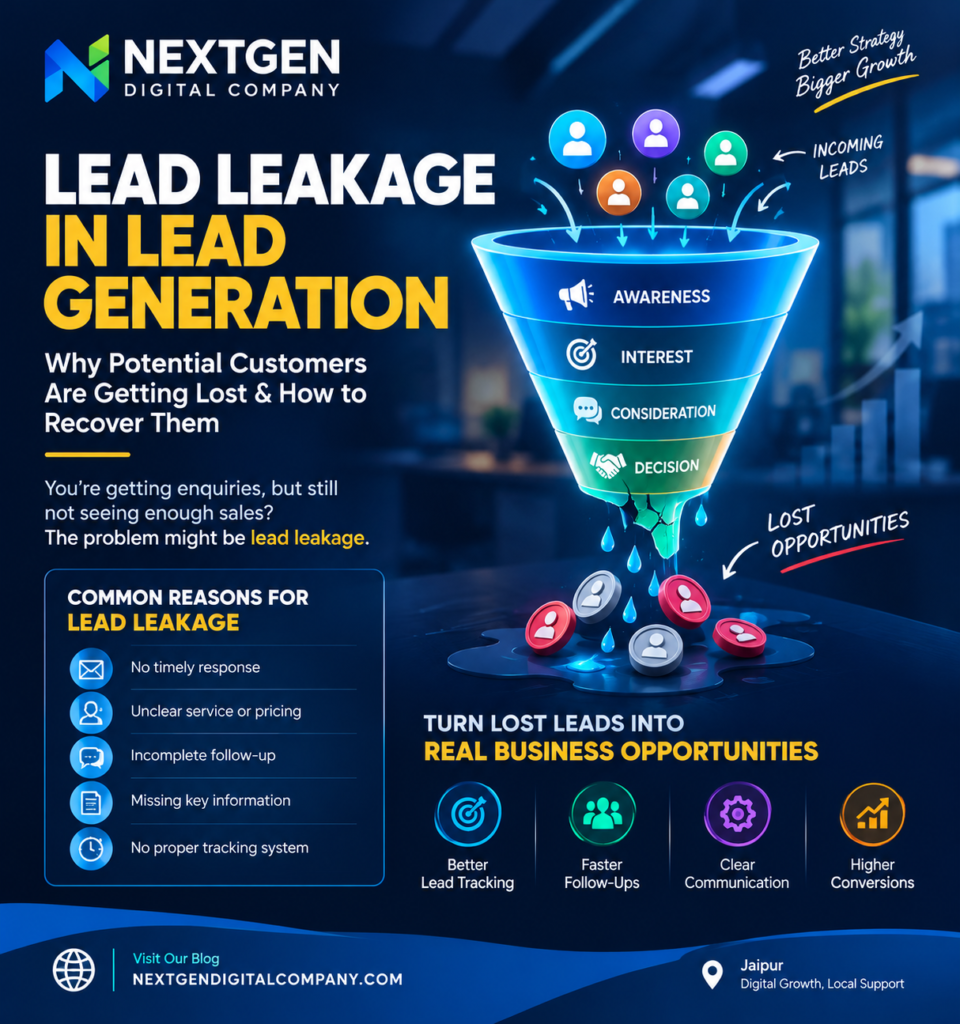
Lead Leakage in Lead Generation

The Hidden Lead Loss Problem: How Introduction: Your Next Customer May Already Have Contacted You Understanding lead leakage is essential for business growth. Imagine a business owner checking their website at the end of the day…” Imagine a business owner checking their website at the end of the day. There are several new enquiries, a few unread emails, two missed calls, and messages asking about different services. Everything appears normal until the owner realizes that some potential customers never received a useful reply. One person was waiting for a price estimate. Another wanted to know whether a service was available for their business. A third had asked a detailed question but never received a clear answer. These people did not necessarily reject the company. Some may simply have moved on because the next step was unclear or the conversation stopped. This overlooked situation creates a different challenge for lead generation: a business can lose sales opportunities even when its marketing successfully attracts attention. For companies investing in online advertising, search engine optimization, social media, and website development, generating more enquiries is only one part of the process. Understanding what happens after an enquiry arrives can reveal opportunities that are already within reach. This guide explores how businesses can identify missed opportunities, understand why prospects disappear, and build a practical system for managing incoming leads more effectively. 1. What Is Lead Leakage? Lead leakage happens when a potential business opportunity is lost somewhere between the first enquiry and the final sales decision. The term describes a problem in the customer journey rather than a single marketing channel. It can occur before a salesperson responds, while a prospect is waiting for information, or after a proposal has been sent. Consider a fictional company that offers website design services. Its advertising campaign attracts business owners who need new websites. People submit enquiries, but the company has no consistent process for recording their requirements or checking which conversations need attention. Some prospects receive a reply quickly. Others wait several days. A few receive a quotation but no explanation of what happens next. The campaign may appear successful because it produces enquiries. Yet the company could be missing opportunities through its own follow-up process. Lead leakage is not always caused by poor marketing. It can result from unclear responsibilities, confusing offers, incomplete information, unrealistic expectations, or a mismatch between what the prospect wants and what the company provides. The first task is to discover where the process breaks down. 2. The Five Places Where Potential Leads Can Disappear Instead of immediately spending more money to attract new prospects, examine the journey that existing enquiries follow. Point One: The enquiry never reaches the right person A customer might submit a contact form, send an email, call the business, or use a social platform to ask a question. If enquiries arrive in several disconnected places, the team may not have a complete picture of incoming demand. A message can remain in one person’s inbox while another employee assumes it has already been handled. A practical improvement: Create one central record of enquiries, even if it is initially a simple spreadsheet. Record the date, contact channel, requested service, assigned person, and current status. The objective is not to introduce complicated software. It is to make every legitimate enquiry visible to the person responsible for handling it. Point Two: The prospect cannot understand the offer A visitor may be interested in a service but still be uncertain about what the company actually provides. For example, a digital agency might advertise “complete digital growth solutions.” A prospective client could reasonably wonder whether that includes website development, paid campaigns, search optimization, lead generation, or all of these services. When the offer is unclear, the prospect must work harder to determine whether the company can help. A practical improvement: Explain the service in plain language. Describe the type of customer it suits, the problem it addresses, what is included, and what information is needed to discuss the project. Clear expectations can reduce unsuitable enquiries and help relevant prospects take the next step. Point Three: The first reply does not answer the actual question A prospect asks how a service works and receives a generic promotional message. Another requests a quotation and receives only a link to the company’s homepage. The response may technically be a reply, but it has not moved the conversation forward. A practical improvement: Train whoever handles enquiries to identify the question before preparing the response. If information is missing, ask a focused follow-up question rather than sending an unrelated sales pitch. A useful response should help the prospect understand something or decide what to do next. Point Four: The conversation stops after the quotation Sending a proposal does not automatically mean the sales process is complete. A prospect may have questions about scope, delivery, pricing, responsibilities, or the difference between available options. If the company does not explain the proposal or invite questions, the prospect may hesitate. Sometimes the prospect is no longer interested. In other cases, the proposal simply needs clarification. A practical improvement: When sending a proposal, explain its main components and identify the next step. Ask whether the proposed scope addresses the prospect’s requirements and whether anything needs clarification. Follow up respectfully, without assuming that silence means agreement or that every prospect owes the company a response. Point Five: The prospect is not ready at the current moment Not every genuine opportunity turns into an immediate sale. A business might be researching providers before approving a budget. Another may need to complete an existing project first. A third may be interested but have a longer purchasing process. Closing these enquiries permanently can remove opportunities that might become relevant later. A practical improvement: Where appropriate and with permission, record when the prospect expects to revisit the decision. Offer useful information and contact them at a mutually suitable time. Not every enquiry deserves repeated follow-up. The goal is to maintain appropriate relationships, not to fill a […]

lead generation guide
Lead Generation

A Lead Generation Guide for Digital Businesses

  Introduction If you want to grow your digital business, having a practical lead generation guide i essential. Not every person who sees your business advertisement is looking for the same thing…” Not every person who sees your business advertisement is looking for the same thing. One visitor may be exploring an idea, another may be comparing providers, and someone else may already be preparing to purchase a service. Treating all three people in exactly the same way can make marketing less effective. A digital business can improve its lead generation process by paying attention to the questions people ask, the information they request and the actions they voluntarily take. These clues can help the business decide what information to provide next. For example, someone reading a beginner’s article about online marketing may benefit from an educational resource. A business owner requesting a proposal may need a direct conversation about requirements, pricing and timelines. Neither person is automatically a customer. However, understanding their immediate needs can make the next interaction more relevant. This guide explains how businesses can organise customer interest into a practical system, distinguish genuine enquiries from casual engagement and decide which marketing activities deserve attention. lead generation guide 1. Understand the Different Reasons People Show Interest People rarely move from discovering a business to making a purchase in one step. Their questions and actions often change as they learn more. A digital business can organise audience needs into three broad groups. People who are exploring lead generation guide These visitors may be learning about a topic, identifying a problem or looking for basic information. For instance, someone searching for information about affiliate marketing may not yet know which products to promote or how commissions work. Helpful educational content is usually more appropriate than an immediate sales pitch. People who are comparing options These visitors have a clearer idea of what they need. They may compare service providers, features, prices or different ways to solve a problem. A business can support them with accurate service descriptions, comparison guides, transparent pricing information and answers to common concerns. People who are ready to discuss a requirement Some visitors directly request a quotation, consultation, product demonstration or service explanation. These actions indicate a more immediate enquiry, although they do not guarantee that the person will purchase. The practical lesson is to match the response to the question or action the person has taken. 2. Recognise Useful Buying Signals A buying signal is an action or statement that may indicate a person’s interest in a particular offer. The meaning depends on the context. A single website visit is usually weak evidence of purchase intent. A detailed request for a proposal is a more direct indication that someone wants to explore a commercial relationship. Examples of potentially useful signals include: lead generation guide Requesting details about a specific service. Asking about project requirements or implementation. Comparing features relevant to a stated business need. Downloading a resource and subsequently requesting a consultation. Returning to a service page and voluntarily submitting an enquiry. Responding to a proposal with a specific question. These signals should be interpreted carefully. A person may revisit a page for research, and someone requesting a quotation may still decide not to proceed. Businesses should use relevant, voluntarily supplied information rather than trying to infer sensitive personal characteristics or secretly monitor individuals. 3. Create a Simple Lead-Scoring Framework Lead scoring is a method of organising enquiries according to how closely they match a business’s requirements and how clearly they have expressed interest. A small business does not need expensive software to begin. It can start with a spreadsheet and a few transparent criteria. For example, a website development company could use the following illustrative framework. Signal Example score Enquiry relates to a service the company provides +3 Prospect describes a specific project requirement +3 Prospect requests a proposal or consultation +4 Prospect asks a question that remains unresolved +1 Request falls outside the company’s services −3 These scores are an example, not a validated industry standard. Each business should adjust them based on its own sales process. A high score should indicate that the enquiry deserves a timely response, not that the person is guaranteed to purchase. Keep the scoring understandable A scoring system becomes less useful when nobody knows why a prospect received a particular score. Document the criteria, review the results periodically and remove signals that do not help distinguish suitable enquiries from unsuitable ones. Avoid using protected or sensitive personal information to determine how much attention a prospect affilite markiting 4. Build a Lead Information Record Once an enquiry arrives, the business needs a practical way to understand what the person requested and what should happen next. A simple record might contain: Field Purpose Enquiry source Shows where the contact originated Requested service Identifies the subject of interest Main requirement Records the person’s stated need Current status Tracks progress through the process Next action Clarifies the required follow-up Outcome Records whether the enquiry progressed Keep records accurate, secure and limited to information needed for the business purpose. Explain data use where required and follow applicable privacy and retention requirements. A lead record should support better service rather than become a collection of unnecessary personal details. 5. Match Each Enquiry With the Right Response The next step should depend on what the prospect actually needs. When someone needs basic information Provide a clear explanation, a relevant guide or an answer to the original question. Avoid forcing a consultation on someone who has only requested general information. When someone is comparing services Explain what your service includes, which requirements it can address and what factors affect pricing or delivery. Do not exaggerate your capabilities or make unsupported promises about business results. When someone is ready for a discussion Ask relevant questions about the project, explain the next step and arrange a conversation if appropriate. A useful process reduces uncertainty for both the business and the prospect. Make sure to align your sales […]

affiliate marketing leads
Lead Generation

how to get high converting verfied leads

Affiliate marketing can help digital entrepreneurs earn commissions by connecting customers with relevant products and services. However, success depends on more than sharing links. You need to attract people who have a genuine interest in what you promote. This guide explores practical ways to generate affiliate marketing leads through SEO, social media, email marketing, landing pages, free resources, webinars, and paid advertising. It also explains how to identify qualified prospects, improve conversion rates, track results, and avoid common mistakes. Whether you are starting your first affiliate marketing project or improving an existing digital business, these strategies can help you create a more focused and sustainable lead generation process. Table of Contents Introduction to Affiliate Marketing Lead Generation What Are Affiliate Marketing Leads? Why Quality Leads Matter How to Get Leads for Affiliate Marketing Top 10 Strategies for Generating Quality Leads Organic vs. Paid Lead Generation How to Build an Affiliate Lead Funnel How to Measure Lead Generation Results Expert Tips for Better Results Common Lead Generation Mistakes Frequently Asked Questions Conclusion and Call to Action Introduction Imagine spending hours creating social media posts, sharing product links, and publishing videos, yet making very few affiliate sales. You may be attracting attention, but the people seeing your content might not be interested in buying the products you recommend. This is a common challenge for affiliate marketers. Affiliate marketing allows you to promote another company’s products or services and earn a commission when a qualifying action takes place. You can work with digital tools, online courses, business services, or physical products, depending on your audience and the affiliate program. However, even a good product can be difficult to sell when it reaches the wrong audience. That is where affiliate marketing leads become important. Instead of focusing only on views and clicks, you work to attract people who have a clear need, want to solve a problem, and are willing to explore a suitable solution. For example, someone casually watching an entertainment video may not be interested in an email marketing tool. However, a small business owner searching for ways to manage customer emails may be much more interested in learning about that tool. The difference is intent. For digital businesses such as Next Gen Digital Company, a focused lead generation strategy can connect useful content with relevant services, products, and educational resources. The good news is that you do not need a large budget or a complicated marketing system to begin. You can start with one audience, one relevant offer, and a simple process for attracting and educating potential customers. Let’s explore how to build that process step by step. 1. What Are Affiliate Marketing Leads? Affiliate marketing leads are people who have shown interest in a product, service, or business solution that an affiliate promotes. A person may become a lead by subscribing to a newsletter, requesting a product guide, registering for a webinar, completing a form, or taking another meaningful action. However, not every lead is ready to buy. Different types of leads Cold leads: These people may not know your business or understand the product you promote. They often need educational content before considering an offer. Warm leads: These people have interacted with your website, watched your tutorials, or downloaded a resource. They have shown some interest. Hot leads: These people are actively comparing products or looking for a solution they may purchase soon. Qualified leads: These people match your target audience and show relevant interest in the offer. Qualification depends on the product and the action the person takes. For example, a visitor reading a beginner’s guide to affiliate marketing may be at an early stage. Someone comparing three email marketing platforms may be closer to choosing a product. What makes a lead valuable? A valuable lead usually has four characteristics: Relevance: The offer matches the person’s needs. Interest: The person wants to learn about a solution. Intent: The person is considering taking action. Trust: The person finds your information useful and credible. The goal is not simply to collect email addresses. It is to attract people who can genuinely benefit from the products you recommend. 2. Why Quality Leads Matter More Than Traffic Many beginners measure progress by counting website visitors, followers, and link clicks. These numbers can be useful, but they do not tell the whole story. A website may receive thousands of visits without generating meaningful sales. Meanwhile, a smaller website with relevant content and a clear audience may attract fewer visitors but produce more qualified prospects. Consider this hypothetical example: Metric Campaign A Campaign B Website visitors 1,000 300 Qualified leads 20 45 Qualified lead rate 2% 15% Sales 2 9 Commission per sale ₹1,000 ₹1,000 Total commission ₹2,000 ₹9,000 These figures are illustrative examples, not industry averages or guaranteed outcomes. Campaign B receives less traffic but generates more qualified leads and sales. The example shows why audience relevance can matter more than visitor volume. Benefits of generating quality leads Quality leads can help you: Spend marketing resources more carefully. Reach people who understand the value of your offer. Improve the relevance of your emails and content. Reduce wasted effort on uninterested audiences. Identify which marketing channels deserve more attention. Build stronger relationships with potential customers. A good lead generation strategy therefore focuses on the entire customer journey, from the first visit to the final conversion. 3. How to Get Leads for Affiliate Marketing Before investing in tools or advertising, create a clear plan. These five steps provide a practical starting point. Step 1: Select a specific audience Avoid promoting products to everyone. A defined audience makes it easier to create useful content and choose suitable offers. Possible audiences include: Beginners learning affiliate marketing. Small businesses looking for digital marketing tools. Content creators who need website software. Students interested in digital skills. Entrepreneurs who want to improve online sales. Choose one audience first. You can expand after you understand what attracts relevant prospects. Step 2: Identify a real problem Research the questions your audience […]

Ritu Verma FLP Leader
purchased 300 leads
VERIFIED ORDER • 1 MIN AGO
Scroll to Top